

9 Best Office Noise Reduction Solutions Without Construction
Posted by Kate Murphy on Apr 22nd 2026
If you’ve ever sat down to focus in a busy office, you know the feeling: you start a task, and within minutes you’re pulled away by a nearby conversation, a ringing phone, or the steady clatter of keyboards. It’s not just distracting. It’s exhausting. Office noise isn’t just a minor distraction. Over time, it slows productivity, raises stress levels, and makes it harder for people to do their best work. The problem has only gotten worse with open floor plans. While they support collaboration, they often leave little room for focus, especially as more teams return to shared spaces. But fixing noise doesn’t have to mean construction. You don’t need to knock down walls, install permanent fixtures, or take on a major renovation project to make a meaningful difference. With the right mix of flexible solutions, like acoustic dividers, sound-absorbing materials, and smarter layouts, you can significantly reduce noise without disrupting your workspace. In this guide, we’ll walk through nine practical ways to create a quieter, more productive office without renovations.
The Science Behind Difference Approaches to Noise Reduction
Before diving into solutions, it helps to understand how noise reduction actually works. Not all sound control methods are created equal, and the best results usually come from combining multiple approaches.
Blocking Sound
Blocking sound is exactly what it sounds like: stopping noise from traveling from one area to another. This requires mass. Think of it like putting up a physical shield between spaces. The heavier and denser the material, the better it is at preventing sound from passing through.
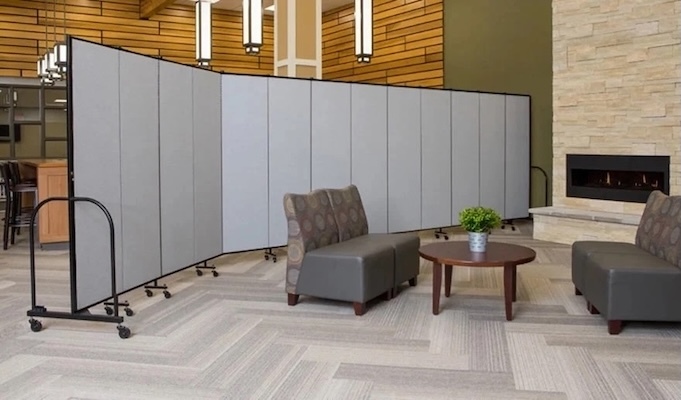
For example, a partition placed between workstations can dramatically improve speech privacy by limiting how far conversations travel.
Absorbing Sound
Absorption tackles a different problem: echo and reverberation. When sound waves hit hard surfaces like glass, concrete, or drywall, they bounce around the room, creating that hollow, noisy feel. Porous materials, like fibrous, felt-like polyethylene terephthalate (PET) material from Screenflex, soak up those sound waves instead of reflecting them. The result is a quieter, more comfortable environment where conversations are clearer and less distracting.
Vibration Isolation
Sometimes office noise isn’t just in the air. It travels through surfaces. Think of a chair scraping across the floor or a printer humming on a desk. Vibration isolation works by decoupling or padding these sources. For example, placing a rug under chairs or equipment can prevent those vibrations from traveling through floors and walls, reducing the overall noise level.
Diffusing Sound
Diffusion doesn’t stop or absorb sound. It scatters it. Irregular or angled surfaces break up sound waves and send them in multiple directions, preventing harsh, direct reflections. This helps reduce the intensity of noise without making a space feel overly “dead.” A good example of this is accordion-style partitions, which create angled surfaces that help disperse sound more evenly.
Sound Masking
Sound masking is fundamentally different from all the above methods. Instead of stopping or altering sound, it covers it up. By adding a consistent, low-level background noise, engineered to match the frequency of human speech, it makes conversations less intelligible and therefore less distracting. This office noise cancellation strategy doesn’t reduce noise, but it makes it easier to ignore.
The Heavy Lifters: Our Top 3 Picks for A Quieter Office
If you’re looking for the biggest impact without construction, these three solutions represent some of the best acoustic approaches for reducing office noise.
1. Office Dividers
Office dividers offer a simple and flexible way to introduce structure without sacrificing the collaborative feel of an open-concept office. By creating defined areas, they help reduce the spread of noise while still allowing teams to work together. The Folding Acoustical Divider is a strong option for this type of setup. It’s built with a heavy foam core and wrapped in acoustic fabric, giving it an impressive NRC rating around 0.50. What makes it especially effective is its accordion-style design, which not only allows for easy repositioning but also helps diffuse sound by scattering it in different directions. This combination of absorption and diffusion makes a noticeable difference in busy environments.
2. Acoustic Solutions
When the main issue in a space is echo or reverberation, acoustic panels are one of the most effective solutions. Large rooms with hard surfaces often amplify sound, making conversations harder to follow and increasing overall noise levels. Haven Acoustic Wall Panels or Haven Acoustic Wall Tiles are designed to address this problem. Made from high-density PET material derived from recycled plastic, they offer both sustainability and performance. They can be mounted on walls, suspended from the ceiling, or even placed on stands, giving you flexibility in how you treat the space. With an acoustic rating around 0.50 NRC, they significantly reduce the amount of sound bouncing around the room. These panels are especially useful in conference rooms where speech clarity is essential or in high-traffic areas where noise tends to reflect off walls and surfaces.
3. Office Cubicles
In environments where employees have designated desks or need a quiet place to take calls, cubicles can help reduce distractions and create a more focused atmosphere.
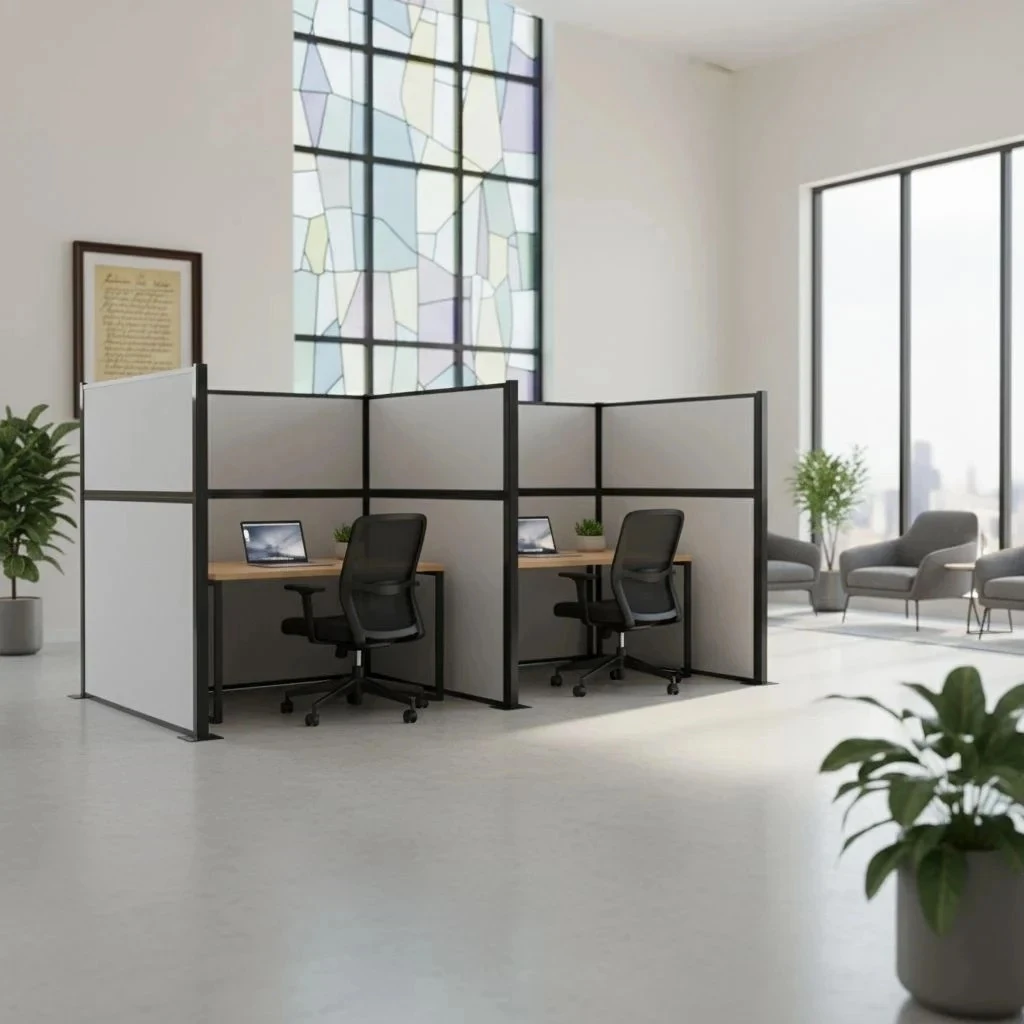
Officeflex Cubicles offer a modern, adaptable approach. These cubicles balance privacy and flexibility, featuring thicker two-inch sound-absorbing tackable panels with a closed-cell honeycomb core. They’re particularly useful in agile workspaces where layouts change frequently or in situations where temporary workstations are needed.
Secondary Additions to Seal in Sound
Once you’ve implemented your primary solutions, these finishing touches can help reduce office background noise even further. Think of them as complementary layers that enhance your overall noise-reduction strategy.
4. Thick Rugs
Rugs work from the ground up. They help absorb sound and reduce vibration, especially from footsteps and moving chairs. They’re a perfect complement to center-room solutions like dividers and cubicles, helping quiet the entire space from the floor level.
5. Window Treatments
Windows are notorious for reflecting sound. Adding heavy curtains or treatments can help absorb some of that reflection. Like rugs, these are “perimeter” solutions that support your main acoustic setup.
6. Tall Bookshelves
Bookshelves are excellent for diffusion. Their uneven surfaces break up sound waves and reduce harsh reflections. However, they won’t absorb nearly as much sound as a high-performance panel.
7. Add Sound-Absorbing Artwork to the Walls

Why not make your office quieter and more visually appealing? Acoustic artwork, like the Haven Acoustic Wall Tiles, adds both style and function. With multiple colors and design options, you can match your brand while improving sound absorption and even blocking some noise.
8. Add plants throughout the office
Plants are great for diffusing sound. Their irregular shapes help scatter sound waves, reducing intensity. While they won’t absorb as much noise as dedicated acoustic materials, they’re a simple way to soften the overall sound environment, and they make the space feel more inviting.
9. Try a White (or Brown) Noise Machine
This falls under sound masking. It won’t reduce noise, but it blends sounds together so they’re less distracting. For example, instead of clearly hearing a nearby conversation, you’ll perceive it as part of a consistent background hum, making it easier to stay focused.
Create a Quieter Office—Starting Today
Creating a quieter, more productive office doesn’t have to mean expensive renovations or permanent construction. With the right combination of flexible, high-performance solutions, you can take control of your workspace acoustics quickly and effectively. Screenflex offers adaptable products designed to meet your needs for office noise reduction. Reach out to our consultants to discuss your needs, layout, and budget, and potential solutions to start building a better work environment today.