11 Tips for Partitioning Offices of All Sizes

Modern offices have a lot to juggle. Hybrid schedules, collaborative teamwork, quiet focus time, and frequent meetings all compete for the same space. The result? Open offices that sometimes feel a little too open.
Separating office space has become an important way to balance collaboration with concentration, reduce noise, and create privacy when it’s needed. But building permanent walls isn’t always practical—especially for businesses in leased offices or teams that expect their workspace to evolve.
That’s where flexible and scalable solutions come in. From portable partitions to creative layout strategies, there are many ways to organize a workspace while keeping it adaptable. In this guide, we’ll explore 11 practical ways to separate office spaces of all sizes, helping workplaces stay productive, collaborative, and comfortable.
Why Separating Office Space Matters
There are plenty of reasons to divide a workspace. In open-plan offices, conversations, phone calls, and everyday activity can quickly become distracting. Creating defined work zones helps reduce noise and interruptions, giving employees the focus they need to stay productive. 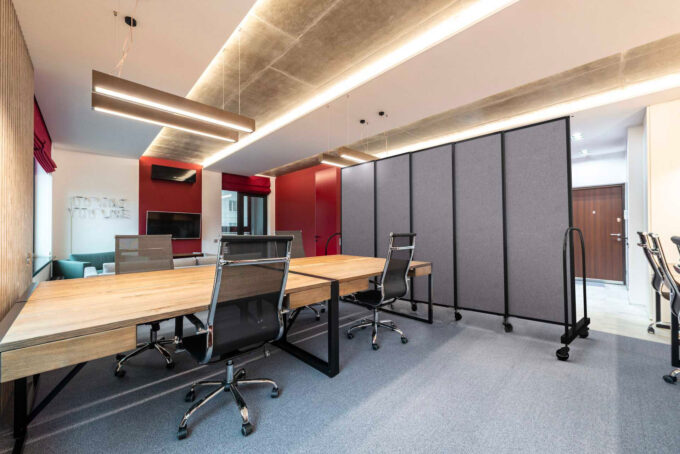
At the same time, separating office spaces doesn’t mean limiting collaboration—it actually supports it. When teams have designated areas for meetings, brainstorming, or project discussions, they can work together freely without disrupting coworkers nearby. These spaces also provide the privacy needed for client calls, confidential conversations, and performance discussions.
Thoughtful office separation can also make better use of your available space. As teams grow or shift, organizations can adapt their layout to create new departments, meeting areas, or project zones without major renovations.
How to Divide an Office Space
Office spaces can be divided in many ways, from simple temporary solutions to more permanent structures. The right approach depends on your office size, budget, and how often your layout needs to change.
1. Use Portable Office Partitions
Portable office partitions are one of the quickest and most flexible ways to separate office space. These freestanding panels instantly create visual and physical separation in open offices without permanent construction.
Because they can be moved, folded, or stored, portable partitions work well for growing teams or offices that frequently reconfigure their layout. They’re also ideal for businesses operating in leased spaces, where structural changes may not be permitted
2. Install Clear Partitions for Visual Openness
Glass, clear polycarbonate, and acrylic partitions separate spaces while keeping offices bright, open, and modern. Because they allow natural light to flow through the workspace, they prevent divided areas from feeling closed off or isolated.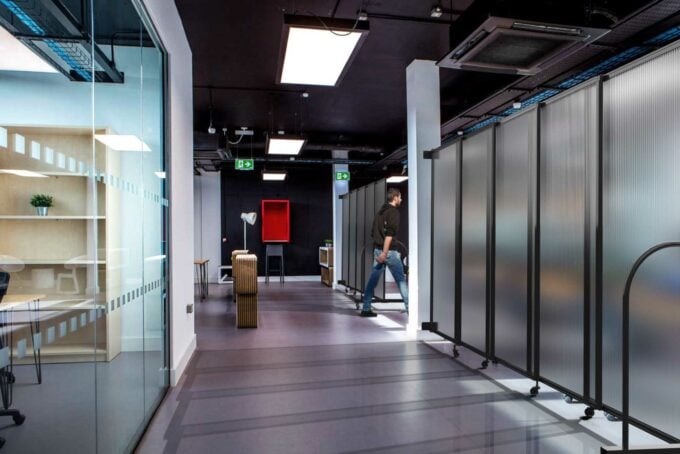
They’re commonly used for conference rooms, executive offices, and meeting areas. For additional privacy, frosted or decorative films can obscure visibility while still maintaining a light, open feel.
3. Divide Space with Modular Wall Systems
Modular wall systems provide a more structured way to separate office space. Made of interlocking panels, they can create enclosed offices, meeting rooms, or dedicated team areas while giving the space a more professional, built-in look.
Unlike traditional construction, modular walls are often designed to be reconfigured or relocated. This allows organizations to adjust their office layout as teams grow or business needs change. For larger offices, modular wall systems offer the stability of permanent walls while still maintaining flexibility.
4. Use Furniture as Functional Dividers
Furniture can also serve as an effective and practical way to separate office spaces. Bookcases, shelving units, and storage cabinets can divide departments while still providing useful storage. Lounge seating or sofas can help define collaboration zones or informal meeting areas. For example, a comfortable seating arrangement may mark the boundary between a quiet workspace and a casual discussion area.
For startups and smaller offices, using furniture to define different areas is a simple, cost-effective way to organize space without installing permanent solutions.
5. Create Quiet Zones with Acoustic Panels
Acoustic panels help control noise while also defining quieter areas for focused work. These sound-blocking panels can be mounted on walls, suspended from ceilings as baffles, or built into mobile screens that move with your layout. By absorbing sound rather than letting it travel across the room, acoustic solutions help maintain a calmer environment where employees can concentrate. For example, placing acoustic panels around a collaborative brainstorming area can keep conversations contained so nearby teams can stay focused without missing a beat.
6. Separate Office Space with Sliding or Folding Walls
Sliding and folding wall systems divide large spaces using two different mechanisms. Sliding walls typically use a ceiling track and telescoping panels that glide across the room, extending outward to create a full partition when needed. Folding walls, on the other hand, rely on 180- or 360-degree hinges that allow connected panels to collapse accordion-style when opened. 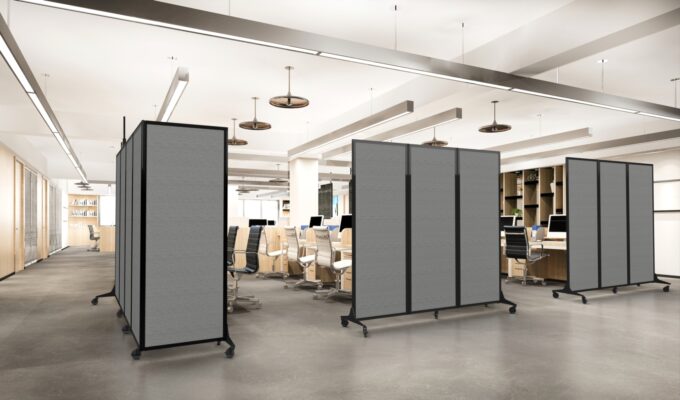
Both systems make it easy to transform a room in seconds. This type of flexibility is especially valuable for offices that host presentations, workshops, or training sessions and need their space to adapt throughout the day.
7. Use Plants and Green Walls
Plants and green walls offer a natural way to separate office spaces. Large potted plants or vertical plant installations can create visual boundaries without adding rigid barriers. They also contribute to a healthier, more inviting workplace, making them a popular choice in creative and collaborative environments.
8. Define Areas with Flooring Changes
Different flooring materials can visually separate office areas without adding physical barriers. Carpet tiles, area rugs, or contrasting finishes can signal how different parts of the workspace are meant to be used.
For example, softer carpeting may indicate quiet work zones, while durable flooring can highlight high-traffic collaboration areas. Rugs can also help define lounge spaces or informal meeting spots. While this approach doesn’t create a physical divider, it helps guide movement and establish clear zones within the office layout.
9. Incorporate Curtains or Soft Dividers
Curtains and canvas panels offer a lightweight, budget-friendly way to separate office spaces. These soft dividers can be opened or closed as needed, making them especially useful in coworking spaces, creative offices, or flexible training environments where layouts change frequently. While they don’t muffle sound, curtains and fabric panels can still create visual separation and temporary privacy when it’s needed.
10. Build Dedicated Pods or Booths
Office pods and privacy booths have become increasingly popular in today’s workplaces. These compact structures provide enclosed spaces for employees who need a quiet environment for phone calls, video meetings, or focused work.
In hybrid offices where employees frequently move between collaborative and individual tasks, pods offer a convenient solution. Instead of reserving a large conference room, employees can step into a booth for a quick call or short meeting.
11. Create Team Neighborhoods
In larger offices, organizing desks into team “neighborhoods” can help maintain structure while still encouraging collaboration. Each department or team works within a defined area, often separated by low partitions, furniture, or cubicle walls.
This layout makes it easy for colleagues within the same team to communicate and collaborate while still maintaining separation from other departments with different workflows or schedules. At the same time, team neighborhoods can help employees feel a greater sense of ownership and identity within their workspace.
Separate Office Space Without Limiting Flexibility
Partitioning office space should support productivity without making the layout rigid. The most effective workplaces balance privacy, collaboration, and flexibility so teams can work comfortably and adapt as needs change.
Before choosing a solution, consider where distractions occur, where teams need privacy, and where collaboration happens most often. Flexible options—such as portable partitions, modular walls, or movable screens—make it easy to adjust layouts without major renovations.
To learn more about adaptable workspace solutions, explore flexible partitioning options from Screenflex or connect with a workspace planning expert.