9 Church Classroom Ideas for Sunday School

The right Sunday school classroom doesn’t just teach lessons. It encourages kids to participate, ask questions, and explore faith together. When a classroom is designed with kids in mind, it supports focus, creativity, and connection, while also making life easier for volunteers and teachers.
The good news? You don’t need a big budget or a full remodel to make it happen. Small, thoughtful updates, like colorful visuals, interactive elements, flexible seating, and clearly defined activity areas, can go a long way. With a little creativity and planning, your faith-based classroom can be a space that encourages movement, imagination, learning, and calm, all in one joyful place.
9 Sunday School Classroom Layout Ideas and Tips
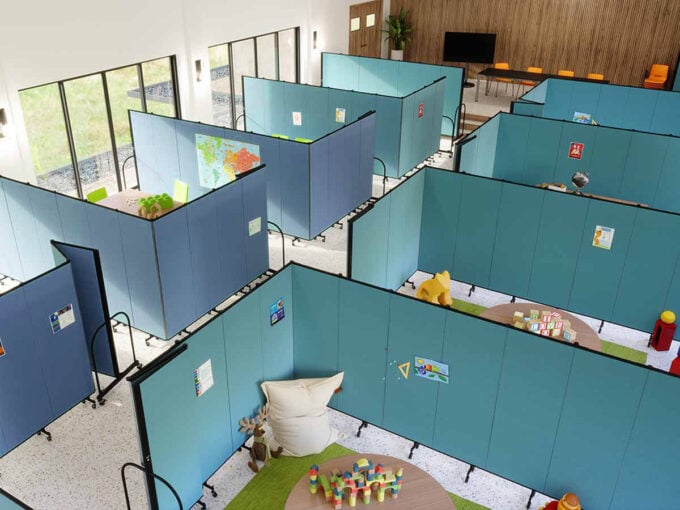
The most effective Sunday school classrooms are designed with how kids actually learn and move in mind. These ideas focus on flexibility, clarity, and engagement—without overcomplicating the space.
1. Design the Room Around Activity “Zones”
Instead of treating the classroom like one big, do-it-all space, think of it as a set of mini environments. Simple dividers, custom-printed partitions, or visual boundaries can help define each zone while keeping the room flexible.
Create a main teaching area where kids can easily see and hear lessons, worship, or group discussions. A rug, floor cushions, or chairs facing one wall work well, and wall art or a colorful backdrop can help define the “front” of the room. For smaller-group moments, use tables, desks, or cozy floor spots to create spaces for conversation and connection. When each activity has a clear “home,” transitions feel smoother, kids know what’s next, and volunteers spend less time managing the room and more time connecting with kids.
2. Add an Interactive Prayer or “Response” Wall
An interactive wall gives kids a hands-on way to engage with prayer and reflection. Use a chalkboard, portable whiteboard, or large paper roll where kids can write or draw prayers or responses to the lesson.
To keep things fun and interactive, leave space for kids to come back and add thank-you notes when prayers are answered or good things happen, big or small. You can also include weekly prompts or reflection questions kids can take home and talk about with their families.
3. Create a Quiet Corner for Sensory Breaks
Big feelings and busy minds happen, and some kids need a moment to reset. Designate a small area with soft seating like pillows, floor cushions, or beanbags—a cozy spot where kids can take a breath, reset, and rejoin the group when they’re ready. This space can be especially helpful for younger children or those who feel overstimulated, making the classroom more inclusive and supportive.
4. Build a “Move Zone” for High-Energy Kids
Many church programs follow long periods of sitting still, which can be tough for energetic kids. If space allows, create a safe area where kids can move with simple activities like stretching, balance games, or gentle movement to help them reset before returning to learning. Also, use soft flooring and set clear boundaries so the area stays controlled and low-risk.
5. Create Focused and Themed Spaces with Flexible Walls
Busy hallways, windows, and shared spaces can pull kids’ attention away from the lesson. Canvas dividers, portable partitions, and lightweight curtains can help block visual distractions during teaching time, giving kids fewer things to look at and more space to focus.
These wall systems can also double as a creative backdrop. Clip on banners, tackable fabric panels, or simple graphics that match the month’s lesson series to bring the theme to life. It’s an easy way to refresh the room and visually connect kids to what they’re learning.
6. Use Visual Cues and Mobiles to Mark Each Activity Zone
Mobiles aren’t just for nurseries. They’re a fun, visual way to help kids connect activities with the lesson. Hanging a simple mobile above each zone helps signal what happens where, whether it’s Bible time, crafts, or games.
You can choose shapes or symbols that tie to the current lesson theme (like stars, doves, or leaves) or to the activity itself (paintbrush for crafts or puzzle pieces or dice for games). Keep materials lightweight and easy to take down so the room can quickly shift when it’s shared or repurposed.
7. Keep Supplies Handy with a Grab-and-Go Organizer
Many volunteers know the scramble of hunting for supplies. An over-the-door pocket organizer puts everything right where you need it. Assign pockets for name tags, crayons, glue sticks, adhesive bandages, parent notes, and more so nothing goes missing when needed.
Add a laminated “restock list” to keep supplies filled and ready each week. It’s a small upgrade that saves time, reduces stress, and helps transitions feel smoother, for kids and volunteers alike.
8. Guide Kids Through the Room with Visual Paths
Kids love knowing what comes next, and visual cues make that easy. A simple floor path helps guide children through the flow of the class without constant reminders. Use tape or paint to add footprints or arrows that lead from Check-In → Lesson Time → Activity Stations, for instance.
To make it even more fun, place a simple icon at each stop, like a book for storytime or a ball for games. These playful cues help younger kids and visual learners move confidently through the room.
9. Use Storage Seating and Flexible Floor Furniture
Flexible furniture keeps classrooms tidy and adaptable. Benches with built-in storage help keep supplies organized while giving kids a simple “put it back” system.
Lightweight seating like mini beanbags, floor cushions, or stackable stools can move easily for storytime, small groups, or games. When the room needs to change, the furniture changes with it. No heavy lifting or complicated setups are required.
Transform Your Sunday School Classroom with Screenflex
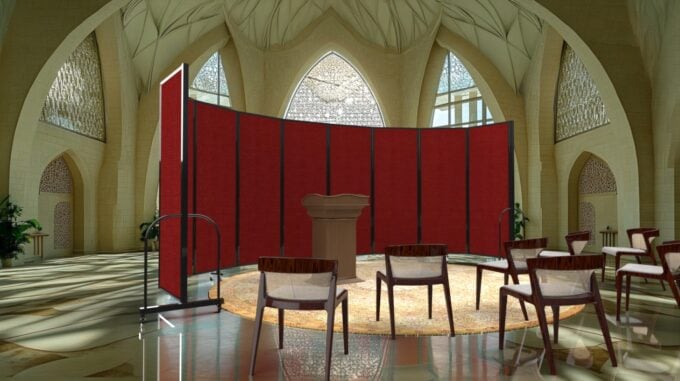
Creating a great Sunday school or faith-based classroom doesn’t mean starting over. It means choosing tools that can grow and change right along with your ministry. Screenflex’s portable room dividers and space-management solutions make it easy for churches to create clear activity zones, reduce distractions, and adapt classrooms for different age groups and lesson styles.
If you’re ready to reimagine your educational or gathering space, our team is here to help. Contact us to explore your options, ask questions, or request a quote for solutions that fit your classroom and your ministry’s needs.